On imagination: an author's note
- Kathryn Kettle
- 4 days ago
- 2 min read

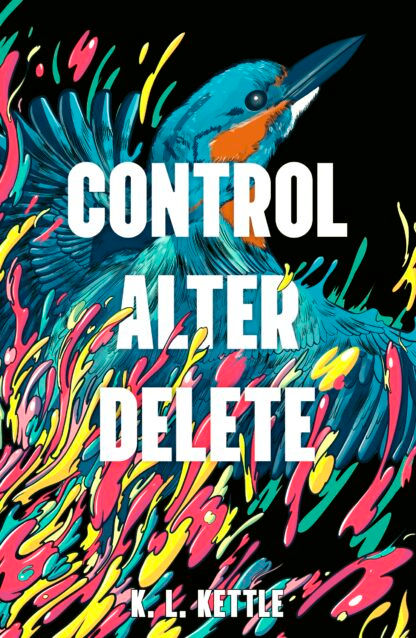
I don't usually explain my own books. You get to decide what they mean, not me (hands off, backs away slowly). But people keep asking me the same thing about Control Alter Delete: is it a "put your phone down" book?
It really, really isn't. So here's the author's note from the back of the ARC book (sent to reviewers and booksellers back in Oct 2025) — the closest I'll get to answering. It's about the quiet, wandering part of your brain where ideas are actually born, and what happens if someone works out how to capture it and sell it back to you. That's the "sciencey bit", and it's also the whole reason I wrote the thing. Here it is, exactly as it appeared in the ARC.
This book began with a simple question: what happens to us when the part of the mind that wanders and dreams, the place where imagination lives, is interrupted, managed, and sold back to us?
Scientific studies suggest that when we are constantly engaged, the mind's natural wandering is interrupted, creativity and well-being suffer, along with our ability to problem-solve. Without the space for inner reflection and imagination, we become more susceptible to suggestion, more easily nudged by curated content, and more likely to mistake borrowed visions for our own.
As the technology we use becomes essential for existing, and the systems that engage us more intoxicating, what then? Alongside what I'd seen both as a user and as a professional in the tech industry, the isolation of the pandemic, the biases built into the systems around us, I couldn't help but worry.
And now for the "sciencey bit": that part of your brain that clicks in when you're bored is called the default mode network. It sparks when we let our thoughts drift, when we make connections, when we daydream. Science can describe it, but to me it feels close to magic: the chamber where ideas and stories are born.
When I thought about what it would mean for this space to be captured or controlled, the Alter began to take shape. What if there were forces battling to own this inner landscape, to harvest its power and sell it back to us? What if, inside that very struggle, lay the real strength of being human?
That is what I wanted to write towards: the conviction that while imagination can be threatened, fenced in, or distorted into an uncanny reflection of ourselves, it cannot be destroyed. And as long as imagination survives, so too does hope. Undefeatable, essential, human.
Control Alter Delete is out now from Little Tiger. Free schools resources, and the School Library Free Book Draw, at klkettle.com.

Comments