On the social media ban: it's complicated
- Kathryn Kettle
- 4 days ago
- 5 min read

Updated: 3 days ago
Right. Let's do this.
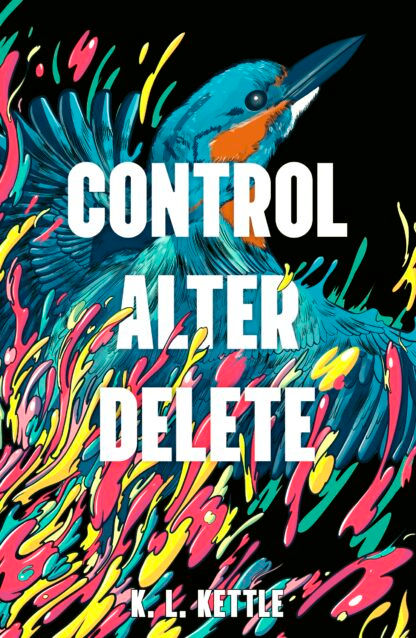
The under-16 social media ban. I'm a senior technologist AND a novelist who just published ‘Control Alter Delete’, a book about how tech and screens are quietly eating our inner lives, so surely I'm cheering?
I’m not. Because, Reader, it's complicated.
Let me start with the problem I have with it, because I do have one. A ban is close to unpoliceable (ask any thirteen-year-old, or any parent who's watched one vanish a screen-time limit in roughly four seconds (waves vaguely at own weekly report, looks away). Worse, it puts the responsibility on the users - the kids, and the parents trying to police them - and lets the people who BUILT these things off the hook. These platforms were engineered, on purpose, by some of the cleverest people alive, to be almost impossible to put down. And a ban lets government dodge the harder job: actually regulating big tech.
Which is more or less exactly what the Good Law Project argues, and I'm with them. Their line is "don't ban children, fix the platforms," and their points are hard to wriggle out of: bans get routed round in about a week (Australia has already shown us that); an unenforceable ban hands us a lovely warm illusion of safety while the actual causes sit there untouched; worse, it drives kids' use underground, where they're far less likely to ask for help when something goes wrong. Fix the design. Kill the dark patterns and the addictive algorithms. Make safety the default. THAT's the fight.
If the ban's real job is to make enough noise that the companies are finally FORCED to change then I'm in. If restriction plus public fury is the lever that finally gets us safety-by-design, if the point was never really "keep the kids off" but "make the sellers behave," then, fine. I'll take it. I'll pick up the messy tool if it moves the thing that's actually broken.
And I'm not against the people pushing for it. Not even slightly. It's a reasonable, understandable, human response to a genuine fear, a fear I share. But (and my whole book is basically an 80,000-word version of this): I will take knowledge, access, learning and conversation over a blanket ban every single time.
Now for the bit I'm weirdly excited about. The kids are going to hack it.
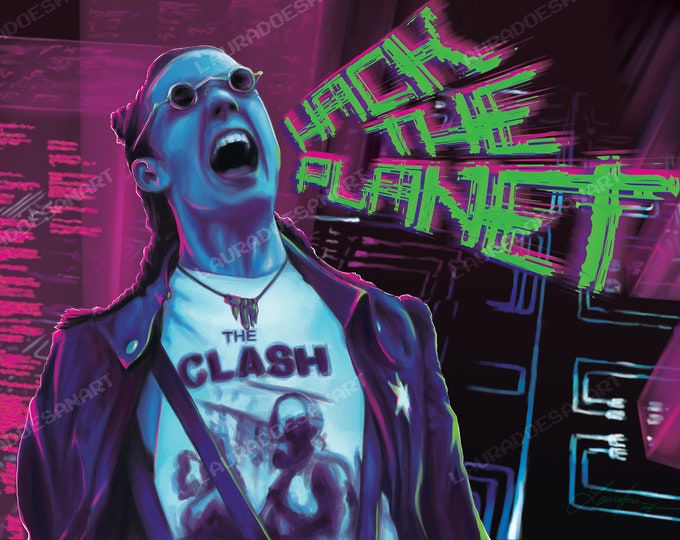
I'm from the generation that fell into technology because of the film Hackers and the gloriously unpoliceable 90s internet, which feels now like a wild new frontier nobody had locked down yet, that basically dared me to learn it. ("Hack the planet." I was extremely cool, obviously.) A generation of under-16s working out how to route around a ban will teach them more about our own tech — how it works, how it's used, where it leaks — than the ban itself ever will. That instinct to poke a system until it gives you something? That's not the problem. It might be the best thing we get out of the whole business.
But — I feel the unfairness that the young people effected have, and I KNOW they will find the ways round it, and those ways will have hidden costs. Driven underground, they'll be less likely to tell an adult when something goes wrong, because now they're not even meant to be there. And some of them will get nudged sideways into spaces we police even less — gaming channels, say, which are famously, exhaustingly misogynistic. (If you've read my books, you'll know that online cruelty, and the narrow scripts we sell young men, are pretty much my Roman Empire.) A ban that accidentally herds kids somewhere worse and then makes them afraid to speak up about how it effects them is my nightmare version of this.
Here's the thing ...and the reason I wrote Control Alter Delete in the first place. There's a quiet, wandering part of your brain — the default mode network — that switches on when you're bored, when you daydream, when you let your thoughts drift. It's where ideas and stories are actually born. It feels close to magic. And my real worry, as a technologist who's watched these systems up close for a long time, is what happens when someone works out how to capture that space and sell it back to us... (which, newsflash, is happening.)
I might be wrong about all of this. It's a nuanced, moving, properly hard topic, I love talking about it, and nobody — NOBODY — has the answer… yet. Nothing here is fixed, including me.
But if I get to plant one flag, it's this, and it's the hill I will die on:
If we take the online square away from young people, we have to fund the offline ones.
There’s a knock-on effect I haven't seen in a single headline: a social media ban also cuts the cord between authors, book bloggers, publishers and young readers. That's a real chunk of how books currently reach kids. (Is losing it a disaster? Maybe not. Publishing has leaned on social as an unmeasurable, often unsuccessful growth punt for years, and being forced to find better ways is probably overdue - meanwhile forcing us authors to become social media influencers, isn’t sustainable.) But this avenue to connect young people to literature can't just evaporate into nothing. So as the ban comes in, there has to be a matching investment in the places where offline connection and knowledge actually live:
Libraries — free, safe, staffed, open to everyone, no login required.
Youth centres — somewhere to go, and someone to talk to, when the feed goes dark.
Reading in schools — which, conveniently, is a hill I will die on regardless.
<insert more ideas in the comments please - this isn't an exhaustive list>
Take away the online social world and leave nothing in its place and you haven't protected young people. You've just made them lonelier. Restrict the online, resource the offline - in the same breath, with the same money, at the same time.
Imagination can be fenced in, distorted, sold back to us in shinier packaging. What it can't be is destroyed — and as long as it survives, so does hope. That's the last line of my book, and it's about the only thing in this entire debate I'm completely sure of.
So: come find me. Tell me I'm wrong. Ideally in a library.
Hack the planet. Buy a book.
— K.L. Kettle.
Control Alter Delete is out now from Little Tiger. I writeYA about power, technology and hope, and I work in global technology & marketing at the front line of where GenAI, Data use and stories collide . This piece is my own view — and I reserve the right to change it!

Comments